FITPRIA
SURABAYA · ID
FitPria · Energy Strategy
Whole grains, legumes, and Indonesia's tropical produce provide a complete energy foundation for training, recovery, and daily output — without the performance cost of processed supplement dependency.
Why Plant-Based Energy
The supplement industry generates billions annually by convincing active men that real food is insufficient. For the majority of men eating a varied, whole-food diet, that premise is false. The complexity of food — its fiber matrix, co-factors, enzymes, and phytonutrients — cannot be replicated in powder or capsule form.
This guide focuses on the plant-based energy sources available across Indonesian pasar and supermarkets — foods that active men can build every meal around without nutritional compromise. The focus is on macronutrient density, glycemic quality, and practical meal integration.
Plant foods do not mean plant-only. This is not a vegan resource. It is a resource that recognises the central role of plants in building an energy-optimal diet for men who train, while leaving room for the animal proteins and fats that complement a plant-led nutritional foundation.
Energy Categories
Slow-release complex carbohydrates that sustain energy through training sessions without blood sugar spikes.
Beras merah · Oat · Jagung
Dual protein and carbohydrate sources with exceptional fiber content for gut health and satiety.
Tempe · Edamame · Kacang
Indonesia's native fruits and vegetables provide rapid-access carbohydrates, antioxidants, and electrolytes.
Pisang · Pepaya · Ubi
Calorie-dense plant fats for hormonal health, fat-soluble vitamin absorption, and sustained energy between meals.
Alpukat · Kelapa · Biji
Energy Source 01
Refined white rice is the caloric staple of the Indonesian diet — available, affordable, and familiar. For most men in light-to-moderate training, it functions adequately. For those seeking performance optimization, replacing a portion of white rice with beras merah (brown rice), jagung (corn), or rolled oats substantially improves glycemic control, B-vitamin intake, magnesium content, and dietary fiber.
The practical approach is partial substitution — mixing white and brown rice initially, then gradually increasing the whole grain proportion as digestive tolerance adapts. Full replacement is ideal but not necessary to achieve meaningful nutritional improvement.
Grain
GI
Fiber/100g
Protein
Beras Merah
50
3.5g
7.5g
Beras Putih
73
0.4g
6.8g
Oat (rolled)
55
10.6g
16.9g
Jagung
52
7.3g
9.4g
Quinoa
53
5.0g
14.1g
Local Sources
Energy Source 02
Tempe is one of the most nutritionally complete plant foods available anywhere in the world — and it originates in Indonesia. Fermentation of soybeans with Rhizopus mold increases protein bioavailability, produces vitamin B12 precursors, reduces anti-nutritional compounds, and creates a gut-friendly probiotic matrix that supports microbiome diversity.
For active men, tempe delivers approximately 19g of protein per 100g alongside 9g of fat and 7.6g of carbohydrates — a macro profile that supports both muscle protein synthesis and sustained energy. Its accessibility and low cost make it a superior alternative to imported protein supplements for the vast majority of Indonesian men.
Beyond tempe, red and black beans, edamame, kacang hijau (mung beans), and chickpeas provide additional legume variety. A diet incorporating two to three legume servings daily covers protein, fiber, iron, zinc, folate, and complex carbohydrate requirements simultaneously.
19g
Protein per 100g of tempe
Complete
Amino acid profile (all 9 essential)
Local Sources
Energy Source 03
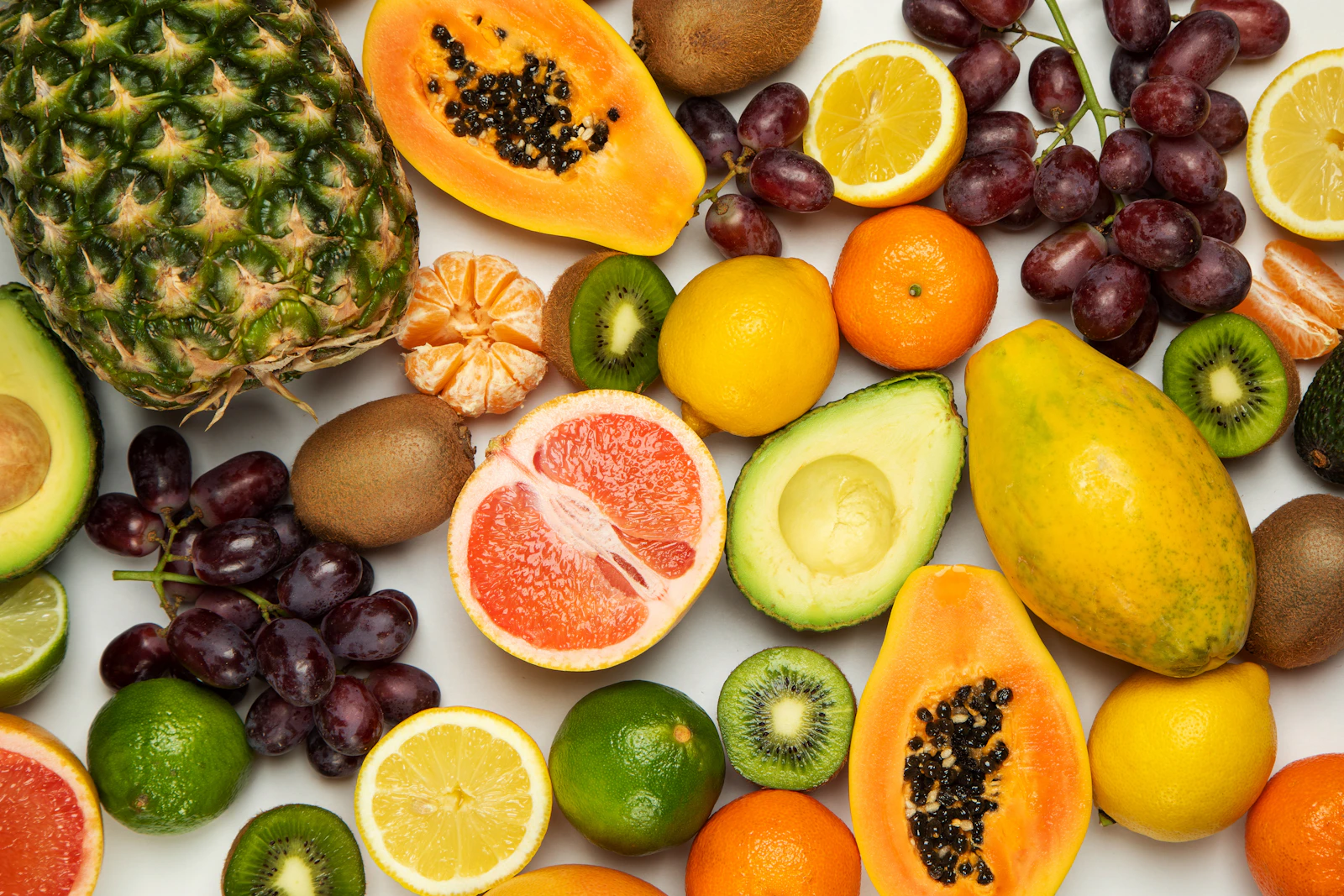
Active men in Surabaya have year-round access to some of the most nutrient-dense produce available anywhere — much of it harvested within days of purchase from local pasar. Pisang raja provides pre-workout potassium and fast-acting glucose. Papaya delivers bromelain-adjacent digestive enzymes alongside vitamins C and A. Young coconut water replenishes electrolytes post-training better than most commercial sports drinks.
The key is strategic timing. Tropical fruits with higher sugar content — pisang, nanas, pepaya — are best consumed pre- or immediately post-training when the body's glucose uptake machinery is primed and glycogen replenishment is the priority. Lower-sugar options like alpukat, jambu biji, and salak are excellent at any time of day.
Timing Guide
Pre-Training (30–60 min before)
Pisang, Ubi jalar, Kurma — fast glucose + potassium
Post-Training (within 45 min)
Pepaya, Nanas, Air kelapa muda — enzymes + electrolytes + glycogen
Any Time (low glycemic)
Alpukat, Jambu biji, Salak — healthy fats, vitamin C, antioxidants
Local Sources
Practical Application
This sample structure applies the principles above to real Indonesian food. Adjust quantities to your caloric target and training intensity.
06:30 — Breakfast
Pre-Sun09:30 — Pre-Training
Fuel12:00 — Post-Training Lunch
Recovery15:30 — Afternoon Snack
Bridge19:00 — Dinner
RecoveryDaily Totals (Estimated)
Adjust quantities based on bodyweight (target 1.6–2g protein/kg), training load, and caloric goals.
Energy Source 04
Dietary fat from whole plant sources provides caloric density for men in a sustained caloric surplus, supports fat-soluble vitamin absorption (A, D, E, K), and provides the lipid substrates for testosterone and other steroid hormone synthesis.
Alpukat (avocado) is the standout plant fat source available in Indonesia — calorie-dense, potassium-rich, and loaded with monounsaturated oleic acid associated with improved cardiovascular markers. Kelapa (coconut) provides medium-chain triglycerides (MCTs) that are rapidly converted to energy without hepatic processing. Biji wijen (sesame), biji labu (pumpkin seeds), and various local nuts complete the plant fat portfolio.
Local Sources
Continue Reading
In Surabaya's tropical heat, hydration is as critical as nutrition. Learn the electrolyte strategy for training in Indonesia's climate.